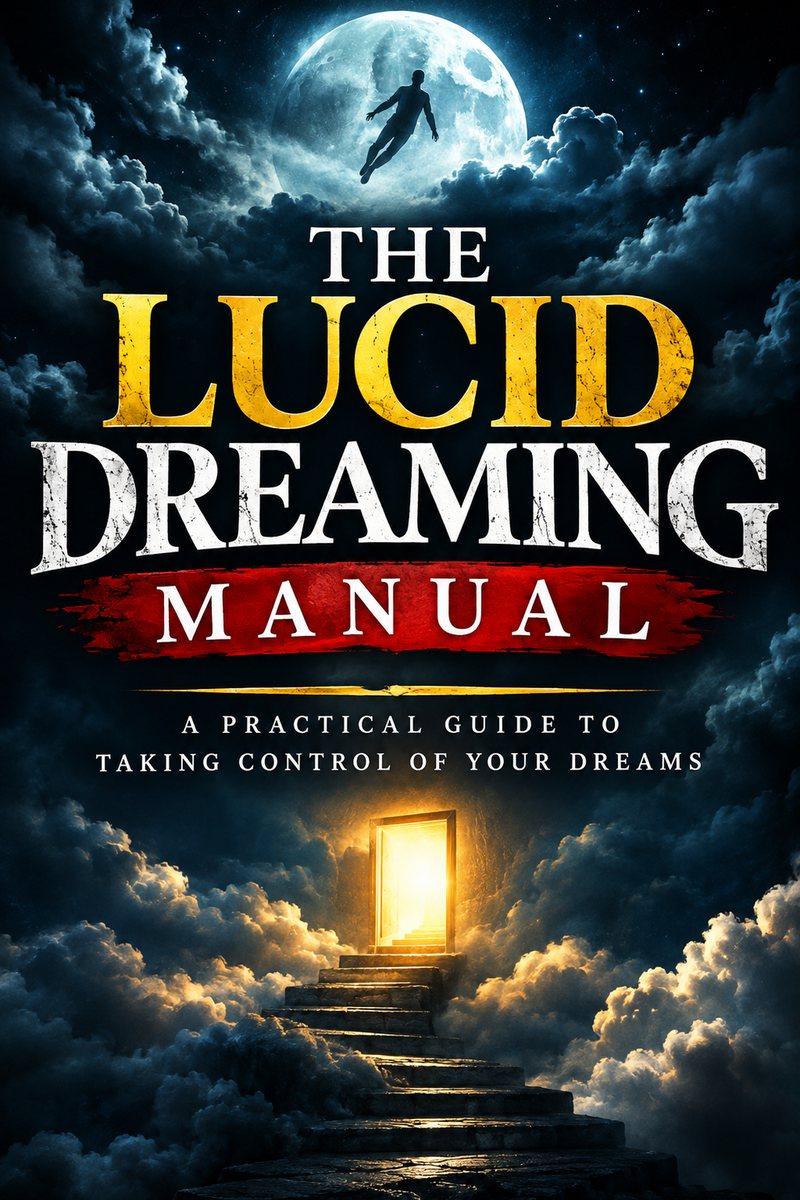


Fifty lessons, one volume, built from eleven years of overnight hypnograms at the Calder Sleep Clinic: dream recall training, reality checks that actually work, wake-back-to-bed and MILD timed to your own cycle length, what the supplement and mask studies really show, and a troubleshooting section for every way an attempt fails. Each lesson gives you the steps, the mistakes people make, and where the method stops working. It doesn't need belief, a teacher, or a lab: just a notebook and an alarm clock.
By buying you agree to the Terms of Sale and Refund Policy.
0 people went to checkout in the last 24 hours
PDF · 128 pages · 50 illustrated lessons · read on phone, tablet or computer, or print it
Lucid dreaming is a skill you practise, not a treatment. This book does not diagnose, treat or cure nightmares, insomnia, sleep paralysis or any other condition. If your sleep is affecting your health, talk to a doctor.
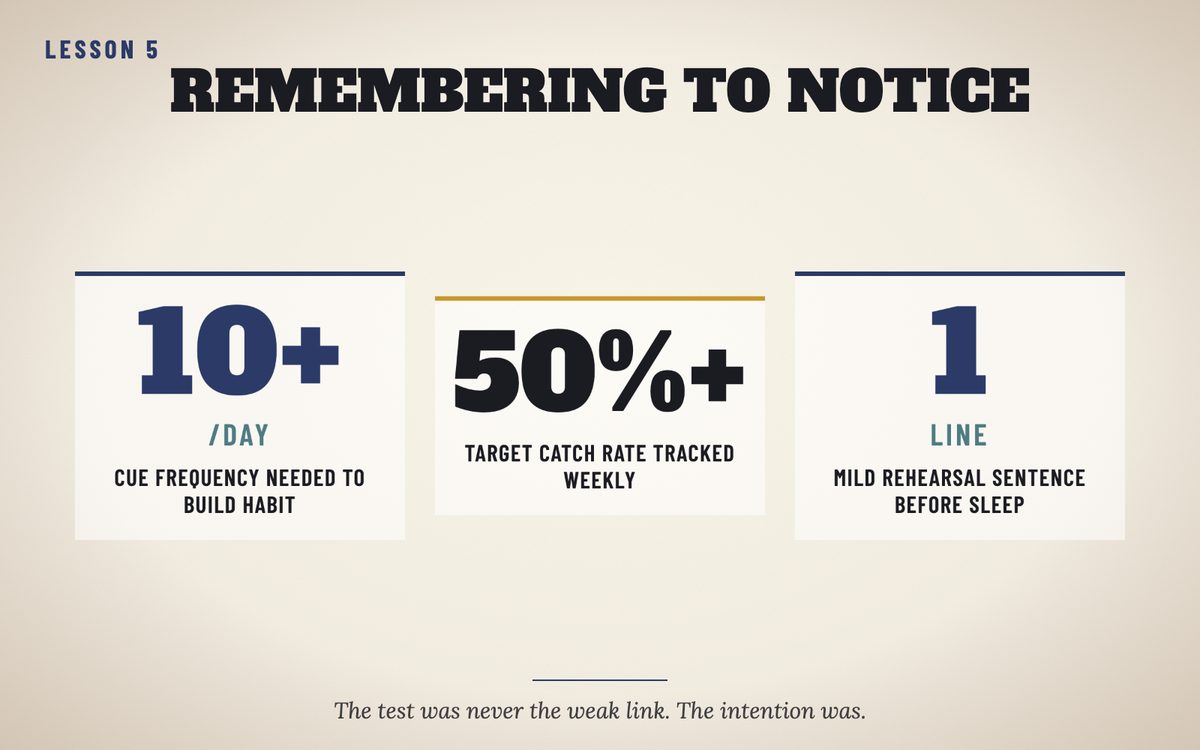
You already know the terms: REM density, prospective memory, dream signs. This is for the night you actually catch one and need to know exactly what to do in the next ten seconds, and what to write down when you wake up.
145 named problems in the back index, sorted by symptom. Find what's going wrong at 6 a.m. and go straight to the lesson.
159 mistakes named inside the lessons, each with the sign it's happening and the exact fix: not a general warning.
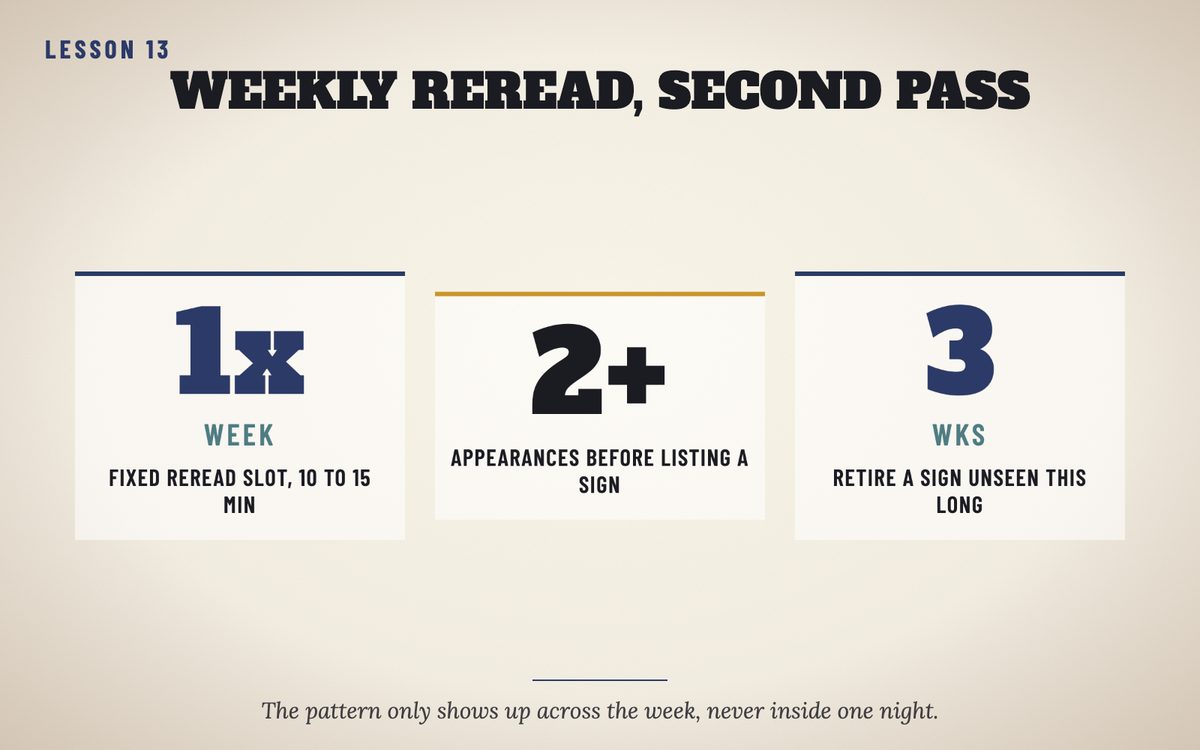
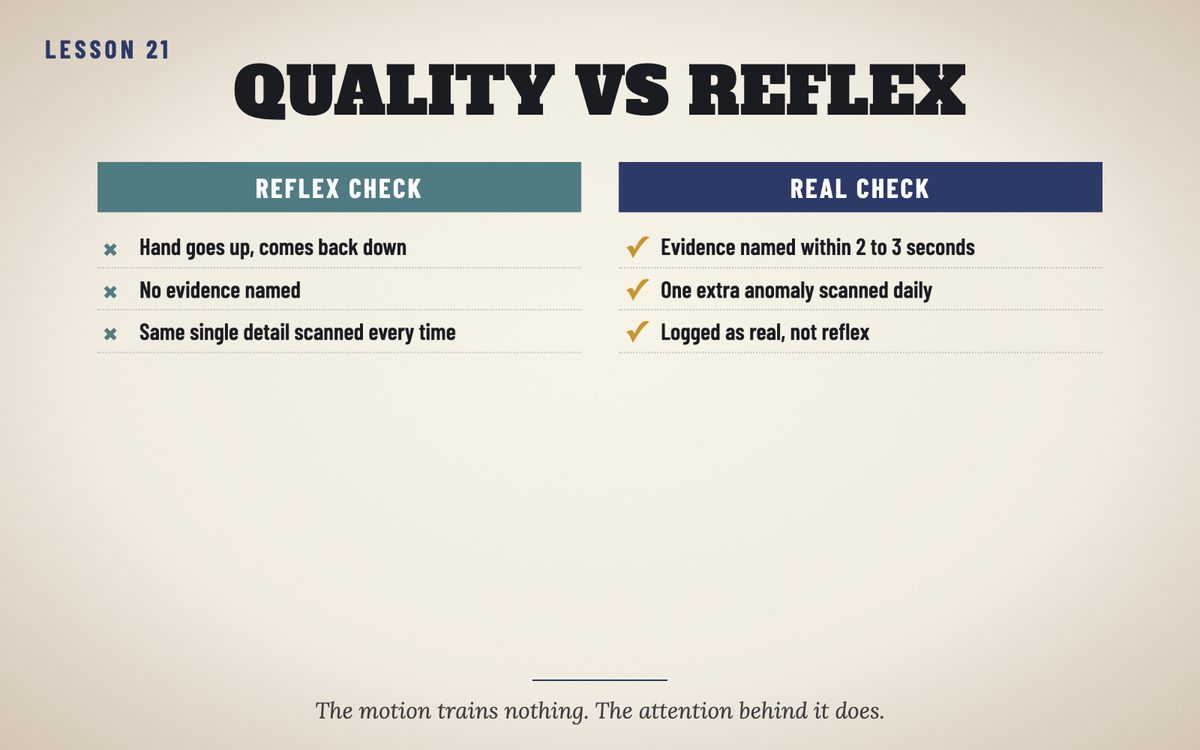
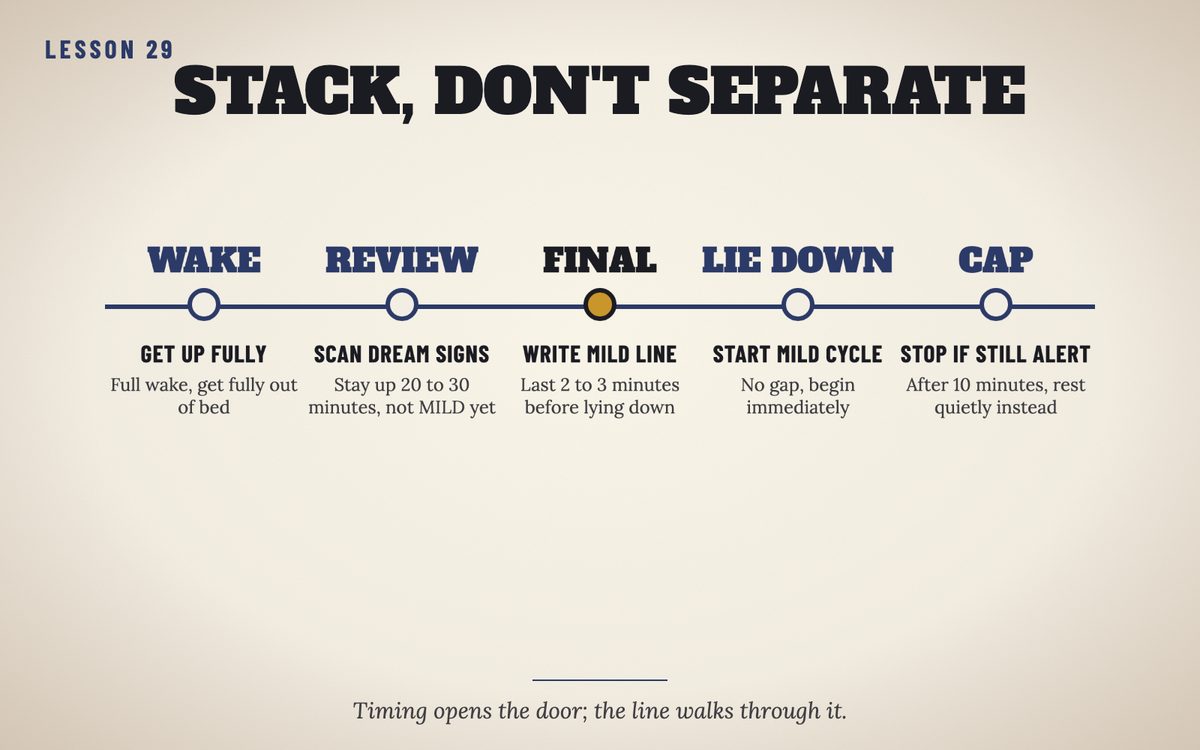
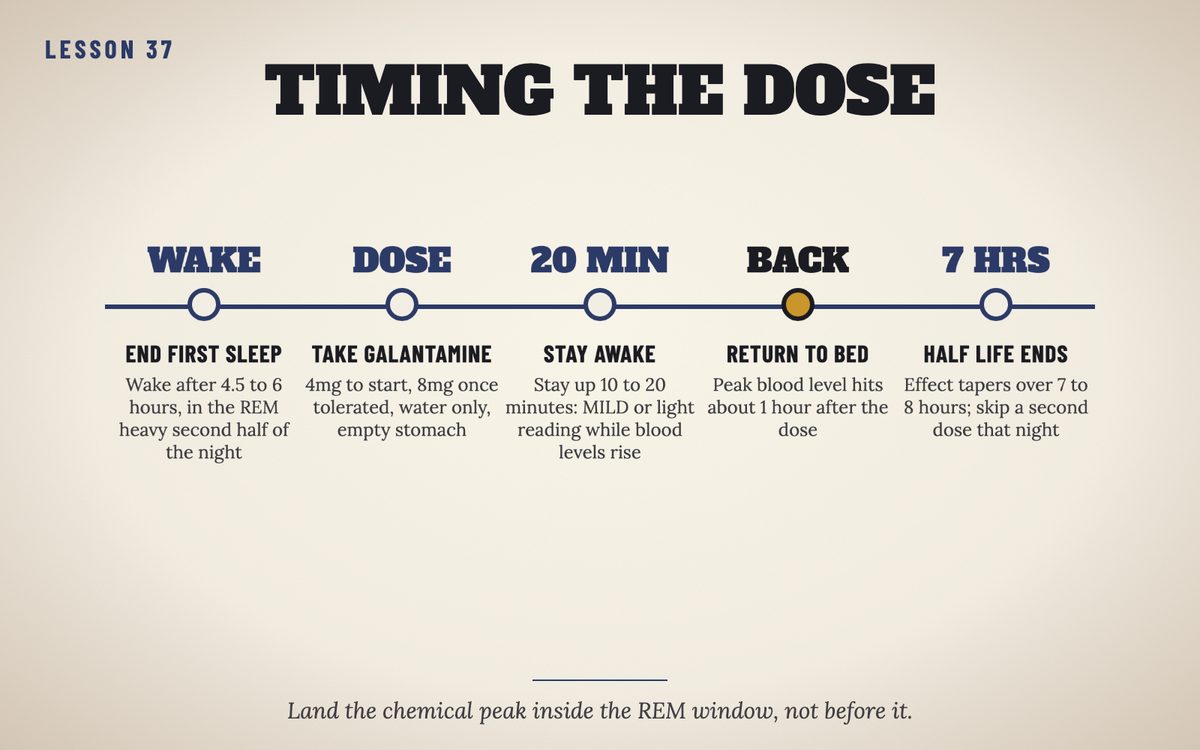
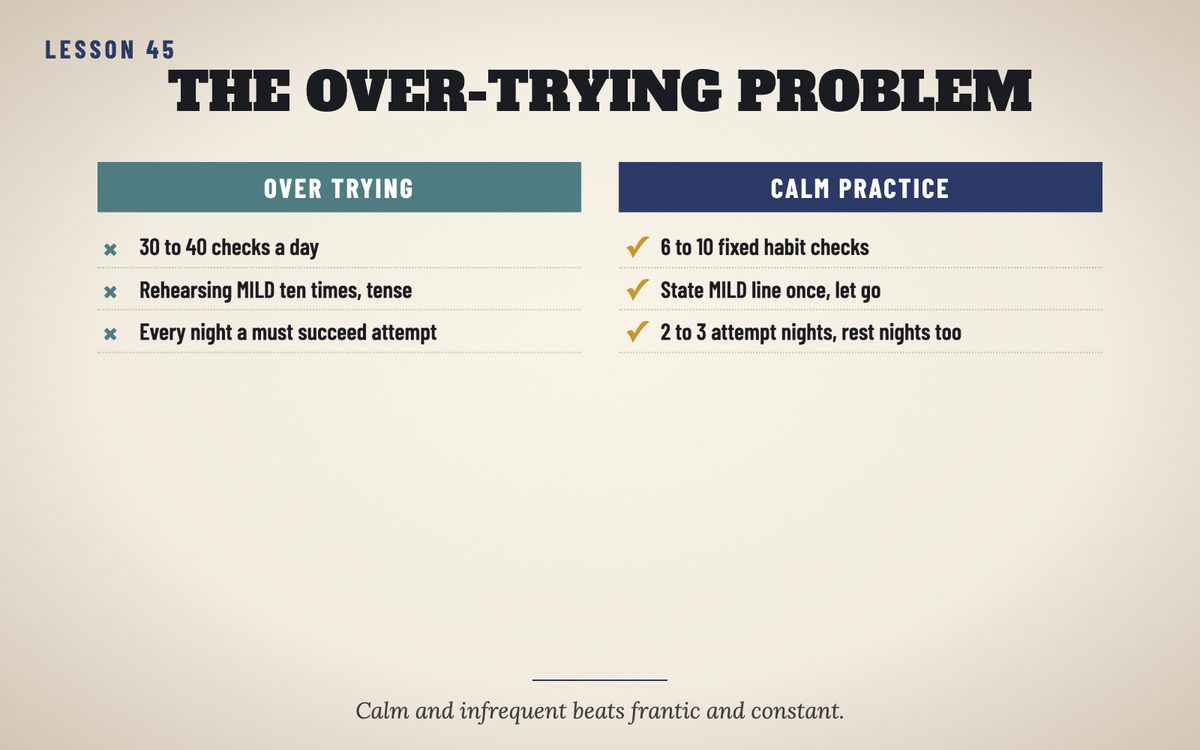
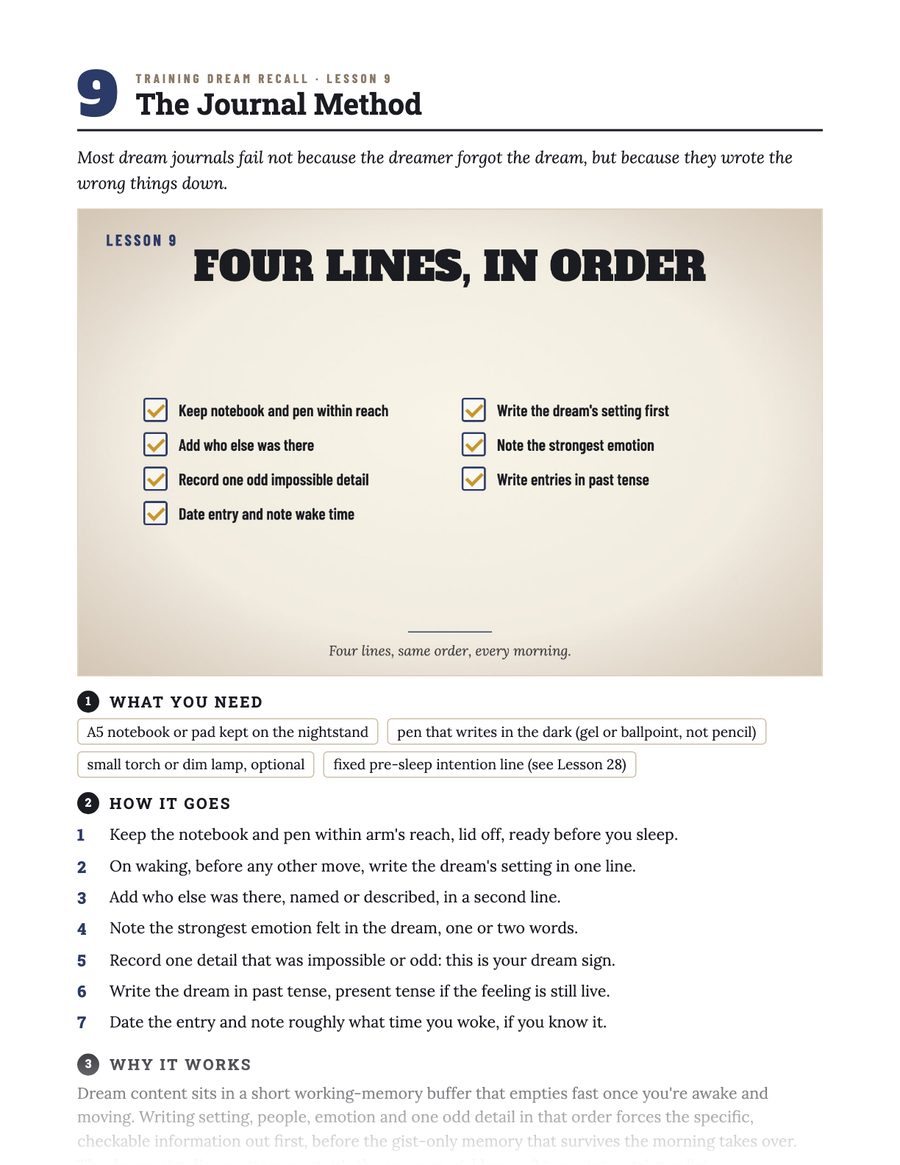
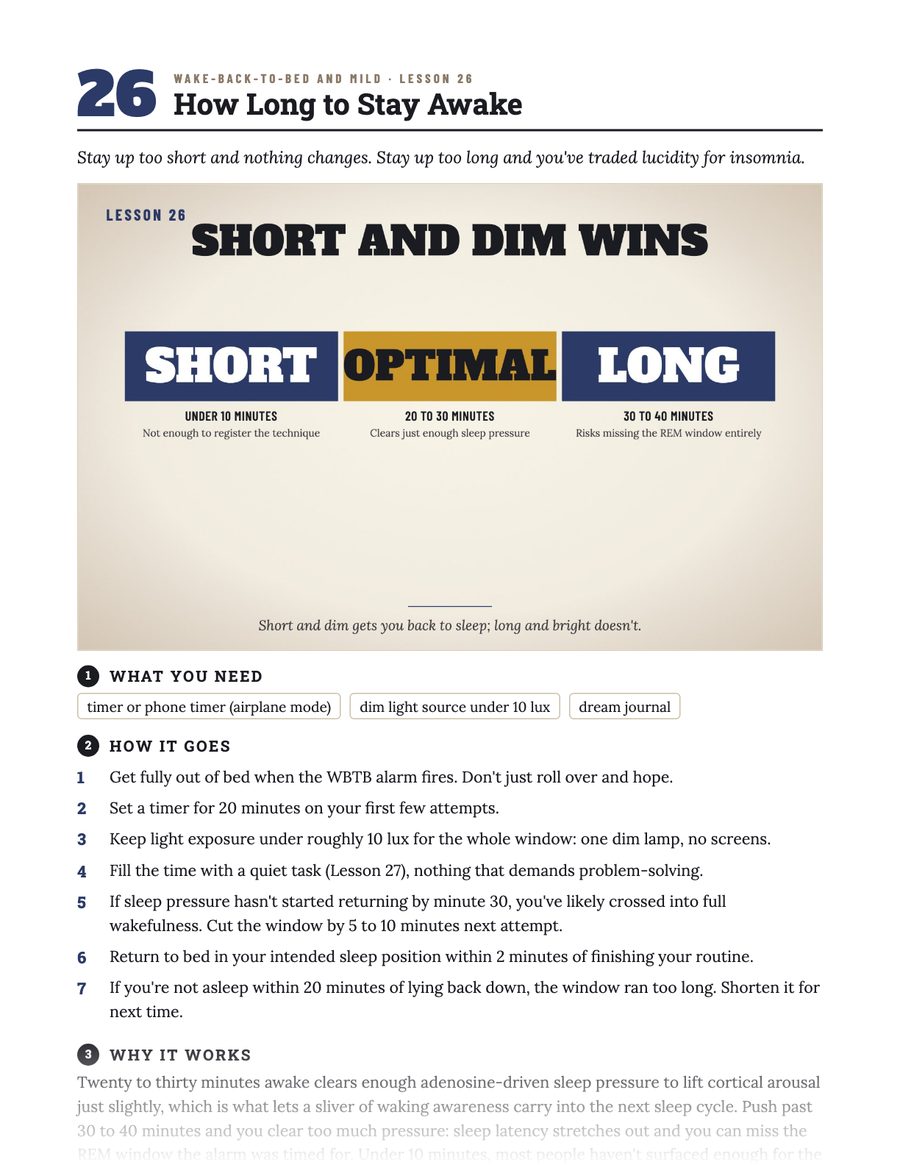
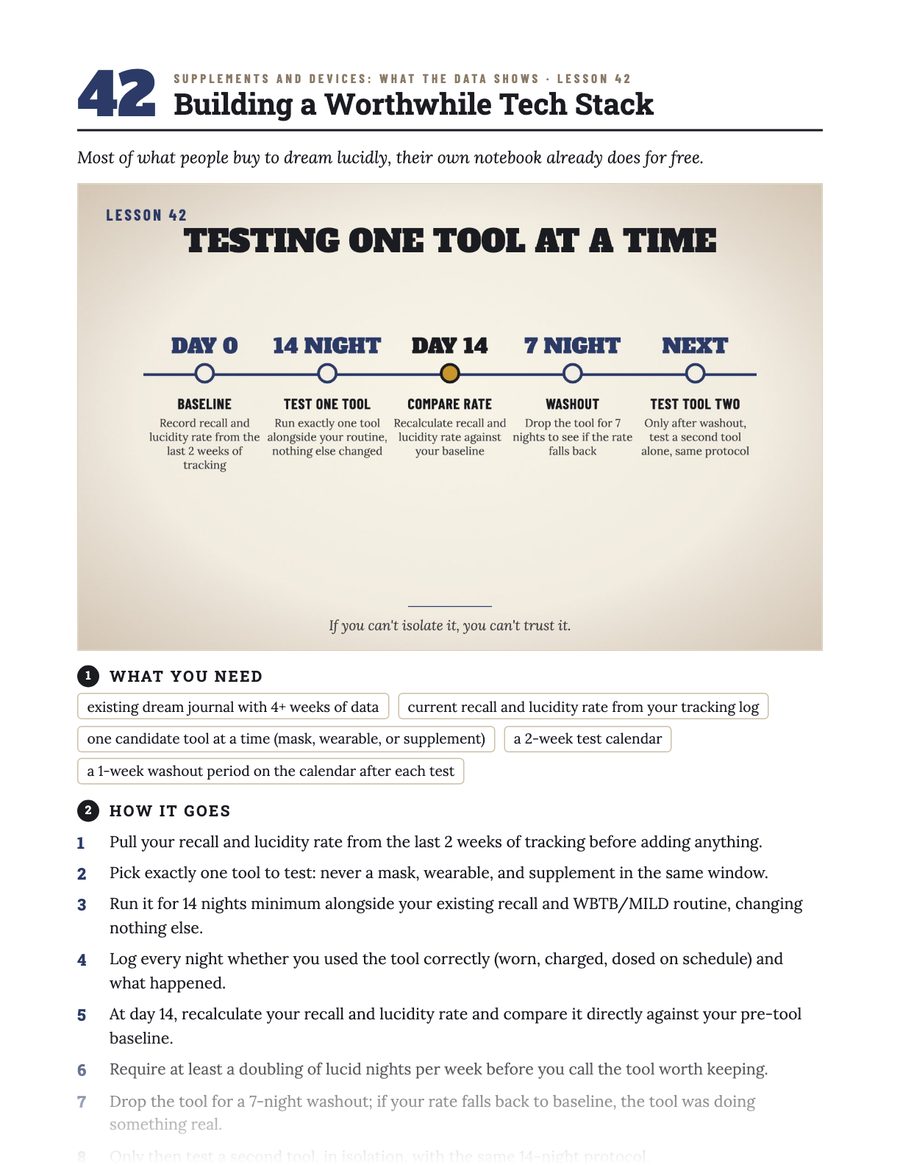
50 drawings, one per lesson, showing the check, the window or the log: not a stock photo of someone asleep.
141 figures in the reference section (cycle lengths, dosing windows, agreement rates), written out plainly, with their source and their limits.
Fifty lessons across six sections: understanding lucidity, training recall, reality checks, wake-back-to-bed and MILD, what the supplement and device data actually shows, and troubleshooting every way an attempt fails.
Fifty drawings, one per lesson, showing the check, the window, or the log page it's describing: not a photo of a person asleep.


"A dream you can't check is just a story."
Marion used to say it before every shift: a dream you can't check is just a story, a dream you can check is data. I heard it enough times that I started saying it myself, usually around 3 a.m., over someone else's hypnogram.
For eleven years I watched REM periods tick past on a screen while the person wired up to it slept through something I couldn't see. Off the record, after the leads came off, I started asking patients what they remembered.
A few of them had been lucid without knowing the word for it. One man described a state-test almost exactly like the ones Marion used for migraine auras, except his was a dream, and he'd run it on purpose, twice.
I started writing down what worked for him, and what hadn't, in the same order I'd learned to score a sleep stage: method first, failures logged right next to it.
By the time I left the clinic in 2019, I had three years of notes in a ring binder, with Marion's handwriting in the margins from nights she'd read over my shoulder.
This manual is that binder, typed up properly, with the numbers checked again and the lessons put in the order a person actually needs them.
I still fill in a paper sleep log every morning. Old habit, from a clinic that doesn't exist anymore. For anyone who wants the same discipline applied to their own dreams.
Owen

Owen Pierce spent eleven years running overnight sleep studies at the Calder Sleep Clinic in Leeds, wiring up electrodes and reading hypnograms until sunrise. He qualified as a polysomnography technician in 2011, after a two-year placement, and learned to read a study properly from Marion Yates, who'd been scoring them there for thirty years before he arrived.
He left clinical work in 2019 to explain, on camera, what he'd spent a decade staring at alone at 4 a.m. He still fills in a paper sleep log every morning: the same form the clinic used.
Owen Pierce is a fictional, AI-generated character built to present this material clearly. The techniques are standard ones from the lucid dreaming literature, and the numbers have been checked against their sources. There's no Calder Sleep Clinic to ring up, but there is a real, checkable standard for what counts as a reality check, a wake-back-to-bed window, or a lucidity episode, and this book sticks to it.
“State the number, then what it means, then stop talking. That's most of the job.”
One digital book, The Lucid Dreaming Manual: fifty lessons across six sections, fifty drawings, a 145-problem troubleshooting index, and a reference section of 141 numbers (cycle lengths, dosing windows, agreement rates). Delivered as a PDF.
Checkout is through Stripe: card, Apple Pay or Google Pay. The download page opens immediately after payment, and the PDF links work straight from that page.
Yes. It's a standard PDF. Print the whole thing, or just the index pages and reference tables you'll keep going back to.
No, he's an AI-generated character built for this channel. The techniques, studies and numbers referenced are real and checked; the biography is fiction.
The core methods (journaling, reality checks, wake-back-to-bed) carry no real risk beyond a disrupted night's sleep. The supplement section (Lessons 34 to 38) states dosing, interactions and who should skip it plainly; it isn't a substitute for talking to a doctor if you're on medication, pregnant, or have a seizure history.
Full refund within 14 days, no explanation needed.
Card, Apple Pay, or Google Pay, through Stripe checkout.
Fifty lessons, one volume, $32, with a 14-day guarantee if it isn't useful to you.
By buying you agree to the Terms of Sale and Refund Policy.
0 people went to checkout in the last 24 hours